Why Uptown Charlotte Feels Empty: A History, A Pattern, and What It Means for Buyers
- Dante Pinto

- May 17
- 8 min read
Updated: May 17
Charlotte is the second largest banking center in the United States. Around 120,000 people work in and around Uptown. The towers are real. The skyline is real. The money is real.
But nearly one in four Uptown offices is empty. If you actually walk those streets, something else becomes obvious fast. The skyline of a major metropolis is sitting on top of a downtown that still does not function like one.
This piece is about how that happened. It matters because Charlotte's real urban neighborhoods, the ones people choose when they want walkable city living, sit outside Uptown for a reason.
Before Uptown Charlotte: The Brooklyn neighborhood
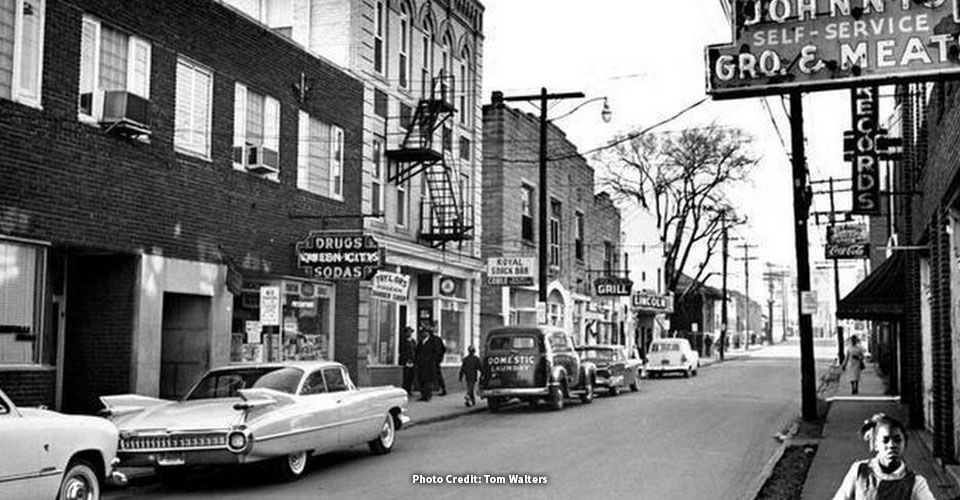
Before there was an Uptown, there was Brooklyn. Brooklyn was a Black neighborhood in what is now Charlotte's Second Ward. 238 acres. Roughly 1,700 buildings. Shops, schools, churches, the state's first free Black library, a YMCA, and Second Ward High School (Charlotte's first Black high school). It was a city within the city. It had been that way for nearly a century.
In 1960, the city declared most of Brooklyn "blighted," a designation that unlocked federal demolition money under the Housing Act of 1949.
Between 1960 and 1977, the city razed it. According to UNC Charlotte's historical archives:
1,480 buildings demolished
1,007 families displaced
216 businesses closed (most never reopened)
About a dozen Black churches destroyed
Four original Brooklyn buildings remain standing today
Not a single residential unit was ever built to replace what was destroyed. Families who had been told they could return when redevelopment was complete were never given the chance. The promised housing never came.
That is the foundation on which Uptown was built. Any honest conversation about its current shape has to start there.
In 2022, the city took one small step toward acknowledgment. Stonewall Street, named in 1869 for Confederate general Thomas "Stonewall" Jackson and running through what was once Brooklyn, was renamed Brooklyn Village Avenue. The LYNX Stonewall Station became Brooklyn Village Station at the same time. The renaming, recommended by Charlotte's Legacy Commission and approved by City Council in 2021, was the last of nine streets renamed to remove memorials to Confederate figures, enslavers, and segregationists. It does not bring Brooklyn back. It does put the name on the map where the neighborhood once stood.
For a deeper look at Brooklyn's history, the Levine Museum of the New South's Brooklyn: Once a City Within a City exhibit and KnowCLT app preserve the voices and stories of former residents.
How highways shaped Uptown Charlotte
Around the same time, Interstate 277 was built as a loop around three sides of Uptown, with Interstate 77 cutting through the northwest. Together, those roads turned the city's center into an island, cut off from every surrounding neighborhood that might have grown into it.
The city renamed downtown "Uptown" in the 1970s. The branding stuck. The underlying problem did not.
What was left was a center stripped of the historic grid that made it work, ringed by highways that made arriving by car easy and arriving on foot nearly impossible. Everything built after that point was designed for the car.
Tryon Street, and everything around it

Walk Tryon on a weekday afternoon, and Uptown makes a reasonable case for itself. Eighteen million visitors a year. Restaurants. Plazas. A baseline of activity.
Step one: Block off Tryon in either direction, and the case falls apart.
Because of the topography, most office towers placed their parking garage entrances on the streets running parallel to Tryon. Those streets became the back of buildings. Loading docks. Concrete walls. Ventilation grates. Garage ramps.
Walking feels comfortable when there is something visually interesting roughly every 30 to 50 feet. On Uptown's secondary streets, you can walk three full blocks and pass nothing but a garage door.
The result is a downtown that operates as a single corridor, with Tryon as its spine and almost nothing on either side. Add in surface parking lots and decks (which now cover roughly 26% of central city land), and large sections of Uptown function as parking storage with offices stacked on top.
The Overstreet Mall
In the late 1970s, developers built an enclosed network of elevated pedestrian bridges connecting Uptown's office towers to each other, to restaurants, and to parking decks. It is called the Overstreet Mall.
A worker can now park in a deck, cross a bridge into their building, cross another bridge at lunch to reach a restaurant, and return to their car at the end of the day without setting foot on a public sidewalk. Other cities have rethought, scaled back, or removed similar elevated systems because of what they do to the streets below. Charlotte has kept its system.
The result is predictable. The crowd that should be on the sidewalks at noon is one floor above, inside a privatized corridor that closes when office hours end. The ground floor stays quiet because the foot traffic that would sustain it is somewhere else.
The EpiCentre, which opened in 2008 on one of Uptown's most prominent corners, was the city's biggest swing at street-level entertainment. Bars. Restaurants. A bowling alley. Weekend crowds. Today, it is almost entirely vacant. Storefronts dark. A corridor is empty in a way that suggests something was abandoned mid-sentence.
When there is no street life outside a building to sustain it through hard times, there is nothing to fall back on.
The transit story tells you everything
Charlotte has one transit option that genuinely works. The LYNX Blue Line runs south from Uptown through South End and into Pineville.
South End is now the place people move to when they want something that feels like urban life in Charlotte. New residential towers, restaurants, and the Rail Trail are pulling crowds on weekends. South End's office vacancy is well below the city average. Demand keeps compressing.
It is worth saying out loud. The place people seek out for an urban Charlotte experience is two miles outside Uptown.
Inside Uptown, the same Blue Line produced almost none of that transformation because the city permitted parking decks to be built directly adjacent to several light rail stations. People step off a train and walk into a garage. The basic logic of building around transit was waived.
The LYNX Gold Line streetcar, which runs through the core of Uptown, tells the bluntest version of the story. It runs in regular traffic with no separation from cars. It costs roughly $18.71 per passenger mile to operate, compared to about $2.10 for the Blue Line. Against a projected 4,100 daily riders, it currently carries somewhere between 1,800 and 2,000.
A line that costs nine times more per passenger mile than its sister line, and pulls less than half its projected ridership, has not given developers or residents much reason to orient their lives around it.
Where the money is going in Uptown Charlotte
Charlotte continues to win major corporate announcements. The 2025 to 2026 stretch produced one of the city's strongest recruitment runs in over a decade, with Mecklenburg County calling 2025 its strongest year for corporate recruitment in more than ten years. Five of the most significant moves:
Sumitomo Mitsui Banking Corporation (SMBC). One of Japan's largest banks is selecting Charlotte for its second U.S. headquarters. 2,000 jobs over six years at an average salary of $165,316, with $50.5 million in investment. Announced April 2026. Source: Office of Governor Josh Stein.
Scout Motors. Emerging automotive manufacturer establishing its global headquarters at Plaza Midwood Commonwealth near East Independence Boulevard. 1,200 jobs at an average salary of $172,878, with $207 million in investment. Announced November 2025. Source: WBTV.
Maersk. Global integrated logistics company selecting Charlotte for its North American headquarters. 520 new jobs and $16 million in investment, building on Maersk's existing Charlotte workforce of over 800. Announced November 2025. Source: Office of Governor Josh Stein.
Capital Group. Los Angeles-based asset management firm, parent of the American Funds family. 600 jobs and $60 million in investment. Source: Business North Carolina.
Siemens Energy. Energy infrastructure firm adding 500 new jobs in Charlotte. Source: Axios Charlotte.
What is less clear is whether the city winning those announcements is building a place where the people behind them want to spend time after work.
In 2024, Charlotte approved $650 million in public money for renovations to Bank of America Stadium. That figure exceeds the city's entire annual general fund budget for police, fire, and waste management combined. The Center for Economic Accountability named it the worst economic development deal in the country for 2024.
Meanwhile, Uptown's roughly 25,000 residents share two grocery stores. The Publix in First Ward sits in a single-story suburban format with an attached parking deck, on land that could have supported something built for the people who live there.
The real estate read
This is where the conversation usually turns into a sales pitch. I will keep it honest instead.
Uptown has real value. Skyline views. Big employers. A baseline of culture and convention activity. Entire towers are being converted from office to residential right now. The conversion wave (Brooklyn & Church being the most visible example) will reshape the resident population over the next several years. If you want a high-rise condo with tower views and walkable access to your job in finance or law, Uptown offers options that nowhere else in the city does.
What Uptown does not currently have is a real, layered, walkable neighborhood experience at street level. A skyline is not the same thing as a neighborhood.
That is why South End exists in its current form. It is why Plaza Midwood and NoDa kept their historic grids and built up rather than tearing themselves down. It is why Dilworth, Myers Park, Elizabeth, Wesley Heights, and Cotswold pull the buyers they pull. These neighborhoods kept the bones that Uptown lost.
If you are buying in Charlotte and you want walkable city life, the question is not really whether Uptown is "good." The question is what kind of life you want at street level when you walk out your front door. That answer almost always leads you outside the I-277 loop.
What this means if you are buying
A few things worth saying directly.
If you are evaluating Uptown. Buy with clear eyes. The office-to-residential conversion wave is real and will improve street life over time. The structural issues (highway loop, Overstreet Mall, parking-first design) are not getting solved in this cycle. Price your expectations accordingly.
If you are buying in South End
You are buying into the success story, which means you are also buying into the most compressed pricing in Charlotte. The premium is real for a reason. Make sure the trade-offs (density, construction noise, parking) work for how you actually live.
If you are buying in the older in-town neighborhoods
Plaza Midwood, Dilworth, NoDa, Elizabeth, Wesley Heights, Myers Park, Cotswold. You are buying the version of Charlotte that Uptown was supposed to be. That is a real asset, and it is why these neighborhoods do not behave like the rest of the city when the market shifts.
The skyline is real. The money is real. The history is real. Where you actually want to live in Charlotte is a different question, and it has a clearer answer than most people realize.
Charlotte is not a finished city. The conversion wave will reshape Uptown over the next decade, the transit conversation keeps shifting, and the in-town neighborhoods that kept their bones are only getting more valuable as the rest of the region figures out what walkable actually means. But what you buy today is the version of the city that exists today, not the one being promised for 2035. The work is walking the streets, seeing how they feel at noon and at nine pm, and being honest about the kind of life you want at street level. That is the conversation worth having before you sign anything. When you are ready to have it, I live in Plaza Midwood, I work these neighborhoods every day, and I am easy to find.

Comments