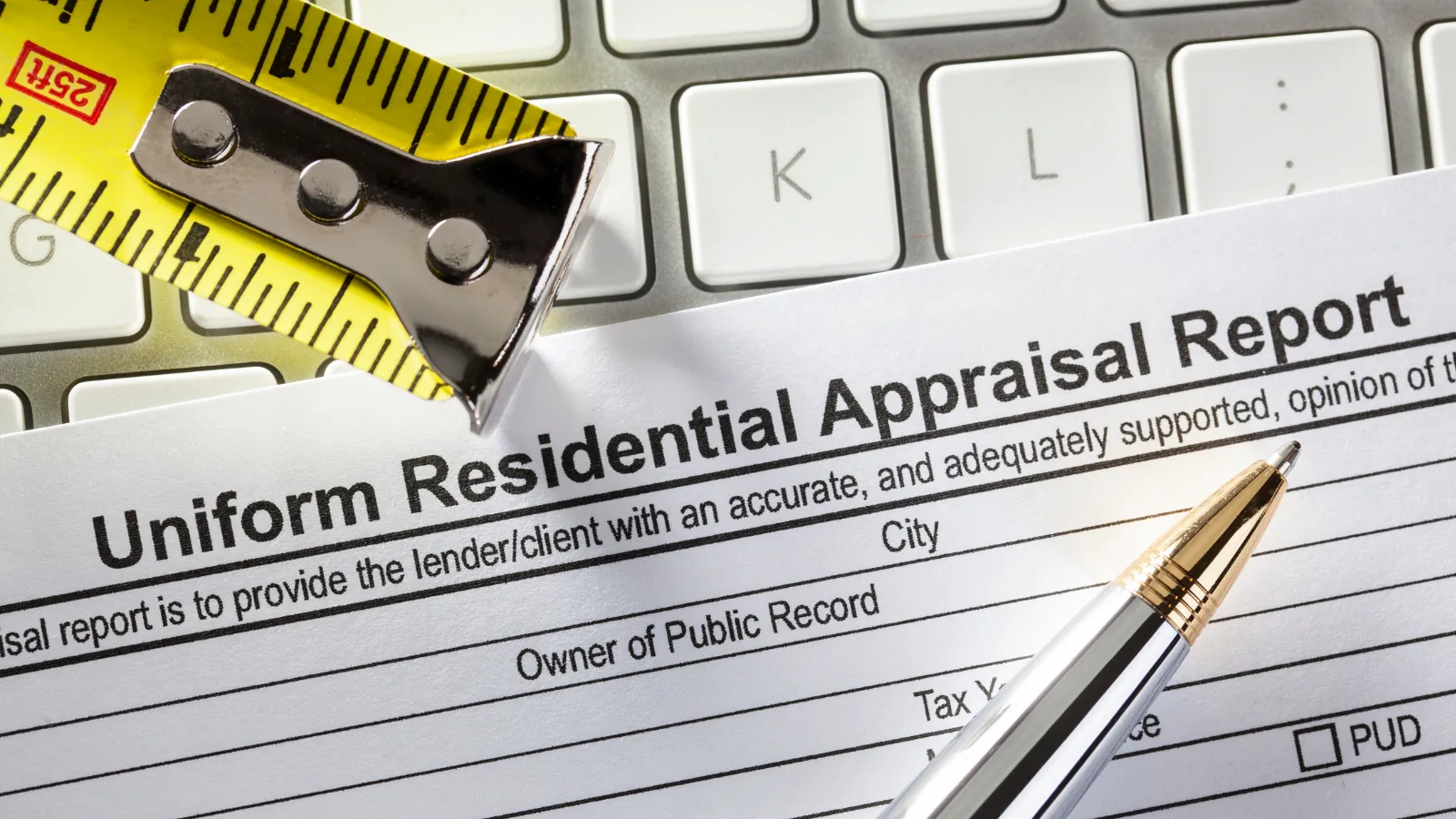
Why North Carolina is different: no appraisal contingency
In many states the purchase contract carries an appraisal contingency, a clause that lets the buyer renegotiate or exit if the appraisal comes in short. The North Carolina Offer to Purchase and Contract, Standard Form 2-T (revised 7/2025), says the opposite in plain words: there is no loan or appraisal contingency in the contract.
What the contract gives you instead is the due diligence period. A buyer who has paid the agreed due diligence fee can terminate for any reason or no reason at all by delivering written notice before the period ends, and the earnest money deposit is refunded. The period ends at 5:00 p.m. on the date or day count written into the contract, and the contract treats time as being of the essence.
In practice, that is your appraisal protection. It only works while the clock is running.
The timing problem
The appraisal is ordered after your lender starts the loan process, and scheduling and completing it takes time, so the report can arrive late in your window. My week-by-week timeline shows where it sits among the other steps. If the report arrives after the due diligence period has expired, your right to terminate for any reason has expired too. The contract warns that a buyer who terminates outside the period may lose their earnest money deposit.
The form itself advises buyers to talk with their lender before signing to make sure the due diligence period allows enough time for the loan process. I would go one step further and ask the loan officer two specific questions on day one: when will the appraisal be ordered, and when do you expect the report?
The mistake: writing a financed offer with a short due diligence period and no idea when the appraisal will arrive. If the deadline is day 10 and the report lands on day 12, you have given up the cleanest exit you had. The appraisal is also not the only result arriving in that window, so see my guide to home inspections, radon, and termite reports for the rest.
Your options as a buyer
When the appraisal comes in below the price, these are the realistic levers. They can be combined.
- Ask the seller to reduce the price to the appraised value. The seller is not required to, but it is the cleanest fix, because the price then matches what the lender will lend against.
- Split the difference. Agree on a price between the contract price and the appraised value. The lender still lends against the lower appraised number, so you cover the remainder in cash. The calculator above shows how each version changes your cash to close.
- Cover the gap in cash. If you have the funds and still want the property at that price, you can close as written. Think hard about your cash reserves afterward, and about whether you are comfortable paying above an independent opinion of value. A gap is harder to absorb when your down payment is small or comes from an assistance program, so plan for it early. See my guides to down payment assistance in Charlotte and buying your first home.
- Ask your lender about a reconsideration of value. Fannie Mae's Selling Guide requires lenders that sell it conventional loans to have a borrower-initiated process for this. The request has to point to something unsupported, inaccurate, or deficient in the appraisal and include supporting comparable sales, and it cannot be made only because the value falls short of the loan amount. It goes through the lender, it is not a second appraisal, and the appraiser may keep the same number, so ask early enough that the answer arrives inside your due diligence period.
- Request an extension in writing. If you need more time to sort this out, ask the seller for a written extension of the due diligence period. The seller does not have to grant it.
- Terminate during due diligence. If the numbers do not work and the seller will not move, you can walk away before the deadline. Your earnest money is refunded, but the due diligence fee stays with the seller.
Whatever you agree on, get it in writing. A change to the price or terms is an amendment to the contract, and it has to be written and signed by both parties.
Planning ahead: appraisal gap terms
In a competitive situation, some buyers offer to cover an appraisal shortfall up to a set dollar amount. Custom terms like that are written into the contract, commonly through the Additional Provisions Addendum (Form 2A11-T). It is a real financial commitment, so talk it through with me, your lender, and your attorney before you make that promise in an offer.
If you are the seller
A low appraisal is one appraiser's opinion, and it does not change what your home is worth to every possible buyer. It does change what this buyer's lender will lend, and that changes your negotiation. You have a few choices:
- Hold your price. The buyer may cover the gap in cash, or may terminate during due diligence and you go back on the market.
- Reduce to the appraised value. This keeps the deal simple and protects your closing date.
- Meet in the middle. Many deals settle with both sides giving some ground.
- Ask the buyer's lender about a reconsideration of value. If you have recent comparable sales the appraiser may not have considered, your listing agent can pass them along, but the request has to go through the buyer's lender.
One thing to weigh: the next buyer's lender will order its own appraisal. A price one appraiser could not support can be just as hard for the next one, so a clean reduction now sometimes beats a second round of the same problem.
Reducing the risk before it happens
The strongest protection is pricing from recent comparable sales before you list. My guide to selling your home in Charlotte covers pricing, and you can request a free home estimate as a starting point. Beyond that, give your listing agent a dated list of improvements, such as a new roof, updated systems, or a finished renovation, with receipts where you have them, so the information is available if the appraiser asks. I can help you put that package together.
Sources: NC Standard Form 2-T, Offer to Purchase and Contract (revised 7/2025), NC Bar Association and NC REALTORS®; Fannie Mae Selling Guide, B2-1.2-01, Loan-to-Value Ratios; Fannie Mae Selling Guide, B4-1.3-12, Appraisal Quality Matters.
Frequently asked questions
Can I back out of a contract in NC if the appraisal comes in low?
Only during the due diligence period. The standard contract has no appraisal contingency, but it does let the buyer terminate for any reason or no reason before the period ends. If you terminate in time, your earnest money is refunded, though the due diligence fee stays with the seller. After the deadline, walking away can put your earnest money deposit at risk.
Who pays for the appraisal in North Carolina?
The buyer. The standard Offer to Purchase and Contract lists the appraisal among the costs the buyer is responsible for, even though the buyer's lender orders it.
Does a low appraisal mean I overpaid?
Not necessarily. An appraisal is one appraiser's opinion of value based on comparable sales at a point in time, and the lender uses it to decide how much to lend. It is not a legal determination of what a property is worth.
Does the seller have to lower the price after a low appraisal?
No. Nothing in the standard contract requires the seller to renegotiate. The buyer can then cover the gap in cash, ask for a written extension, or terminate during the due diligence period.
Can a low appraisal be disputed?
Fannie Mae's Selling Guide requires lenders that sell it conventional loans to have a borrower-initiated reconsideration of value process. The request has to identify something unsupported, inaccurate, or deficient in the appraisal and include supporting comparable sales, and it cannot be made only because the value falls short of the loan amount. The appraiser may keep the same number, and the process takes time, so the due diligence deadline matters.

Dante Pinto
REALTOR® · The Redbud Group at KW SouthPark
I am Dante Pinto, a REALTOR® with The Redbud Group at Keller Williams SouthPark (NC Real Estate Broker #349833). I wrote this guide to explain how the standard North Carolina contract handles a low appraisal and what options follow. Verified in September 2026 against the current standard contract form and Fannie Mae's Selling Guide.
Last verified: September 2026. Dollar figures in the example and the calculator are hypothetical and for illustration only, not a loan quote, and they assume the lender keeps the same loan-to-value ratio. Government-backed and other loan programs have their own appraisal rules, so your lender is the authority on your loan. This article is not appraisal advice, and an appraisal is one appraiser's opinion of value, not a determination of what a property is worth.
Dante Pinto is a licensed North Carolina real estate broker (#349833) with The Redbud Group at Keller Williams SouthPark (Firm License #C12658), Broker-in-Charge Brijal Shah. Nothing in this article is legal advice. Consult a licensed North Carolina real estate attorney regarding your specific contract.
Equal Housing Opportunity. The Redbud Group at Keller Williams SouthPark, 5600 77 Center Dr #180, Charlotte, NC 28217.