Charlotte Neighborhoods: A Local REALTOR®'s Guide to the 13 Best Places to Live in Charlotte, NC
By Dante PintoPublished May 14, 202619 min read
Charlotte is a city of neighborhoods, and the one you pick shapes almost everything.
Charlotte is a city of neighborhoods, and the one you pick shapes almost everything about how you'll experience it.
A ten-minute drive can take you from craftsman bungalows on a tree-lined street to a high-rise condo with floor-to-ceiling glass to a master-planned cul-de-sac with three-car garages. The price you pay, the schools your kids attend, your morning commute, and where you grab coffee on Saturday, all of it pivots on the neighborhood.
This guide covers the 13 Charlotte neighborhoods I get the most questions about, and the ones that consistently top buyer wish lists. I live in Plaza Midwood, work in the city, and specialize in this part of Charlotte. What follows is honest, not promotional. Where a neighborhood is overpriced, I'll say so; where it's undervalued, same.
If you're moving to Charlotte from another city, here is a map to help you get started. If you've lived here for years and you're ready to move up, move out, or move closer in, this should sharpen your shortlist.
157 people move to the Charlotte metro every day. That's a lot of competition for the right house in the right neighborhood. Knowing which area actually fits you, before you fall in love with a listing, is the single biggest advantage you can give yourself.
Charlotte at a glance
A few baseline numbers worth knowing before you start shopping:
Charlotte median home price: approximately $418K as of September 2026 (Canopy MLS via RPR)
Market type: moderate seller's market. Median days on market: 20
Property tax (Charlotte and Mecklenburg combined): $0.7857 per $100 of assessed value, fiscal year beginning July 1, 2026. See my full breakdown of how Charlotte property taxes work for the worked example and how this splits by jurisdiction.
NC state income tax: 3.99%
Closing requirements: North Carolina requires a real estate attorney at closing
Down payment help: Charlotte's House Charlotte program offers base assistance up to $30,000, plus an additional match up to $50,000, for qualifying buyers
Daily growth: the Charlotte metro adds roughly 157 new residents per day
That growth pressure is the single biggest force shaping Charlotte real estate right now. It's why neighborhoods like South End went from warehouse district to luxury condo corridor in under a decade, and why the older walkable neighborhoods like Plaza Midwood and Dilworth keep climbing. For the latest monthly numbers, see my Charlotte real estate market insights page.
How to use this guide
Each neighborhood gets the same treatment: what it feels like, what you actually find on the ground, who tends to thrive there, and what to watch for before you write an offer. Where I've written a deeper standalone page on a neighborhood, you'll see a link to it. Seven of the 13 below have full detail pages with active listings, school zone breakdowns, and local business maps. The other six get the same depth right here.
Skim if you want, read top-to-bottom if you're newer to Charlotte. The neighborhoods are ordered roughly by central walkability first, then suburban and lakeside last. That's the rhythm of Charlotte: close-in first, then out.
How Charlotte is laid out
Geographic shorthand that will save you time when you start looking at listings:
Uptown is the urban core, the high-rise center city.
Central Charlotte is the ring of historic and emerging neighborhoods within roughly three miles of Uptown. This is where Plaza Midwood, NoDa, Dilworth, South End, Elizabeth, and Wesley Heights live. These neighborhoods are walkable, characterful, and where most of the city's pre-war housing stock sits.
South Charlotte stretches from Myers Park southward through SouthPark, Cotswold (technically east), Waverly, and Ballantyne. This is established, affluent, school-zone-driven, and mostly car-dependent.
North of Uptown is NoDa and the corridor toward Lake Norman, ending in Huntersville and the lakeside communities.
Bonus context: Charlotte's light rail (the LYNX Blue Line) runs north-south, connecting UNC Charlotte at the north end through NoDa, Uptown, and South End down to I-485 at the south. Being walkable to a light-rail station is one of the few features that consistently adds value to a home in this market.
At a glance
All 13 Charlotte neighborhoods, indexed
The 13 Charlotte neighborhoods, in depth
Neighborhood pricing shifts constantly; current figures for the tracked neighborhoods are on my market insights page.
Plaza Midwood
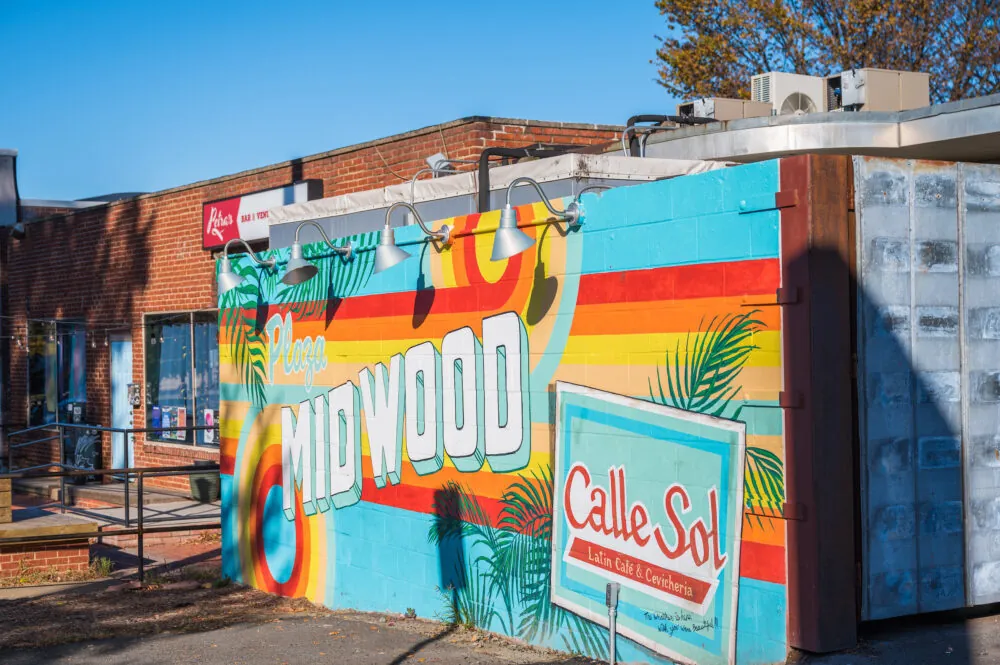
If Charlotte has a neighborhood that refuses to be one thing, this is it. Plaza Midwood is bungalows next to mid-century apartments next to brand-new $1M infill builds. It's the Charlotte Country Club golf course on one side and a tattoo shop a half-mile away. Old Plaza Midwood is gritty in the good way, polished in the new way, and the locals are protective of both.
The historic district runs along The Plaza and into the streets off Central Avenue. Bungalows from the 1920s and 30s anchor the housing stock, with a meaningful slice of newer construction filling in the gaps as older homes turn over. Walk Score is a respectable 56, with most of the walkability concentrated along Central Avenue's commercial stretch.
Median price: Runs comfortably above the citywide median, with original bungalows at the lower end of that range and renovated or new construction well above it.
Who thrives here: buyers who want personality, walkability to coffee and dinner, and don't want a homeowners association telling them what color to paint the trim. The housing mix skews renovated and design-forward compared with most of central Charlotte.
What to know before you buy: the historic district has guidelines. Tear-downs are not a guaranteed yes. Inventory moves fast in the central blocks. Properties closer to Central Avenue trade higher per square foot than streets closer to Eastway.
Local picks worth visiting: Supperland for dinner, Undercurrent Coffee for a quiet morning, Veterans Park for a walk.
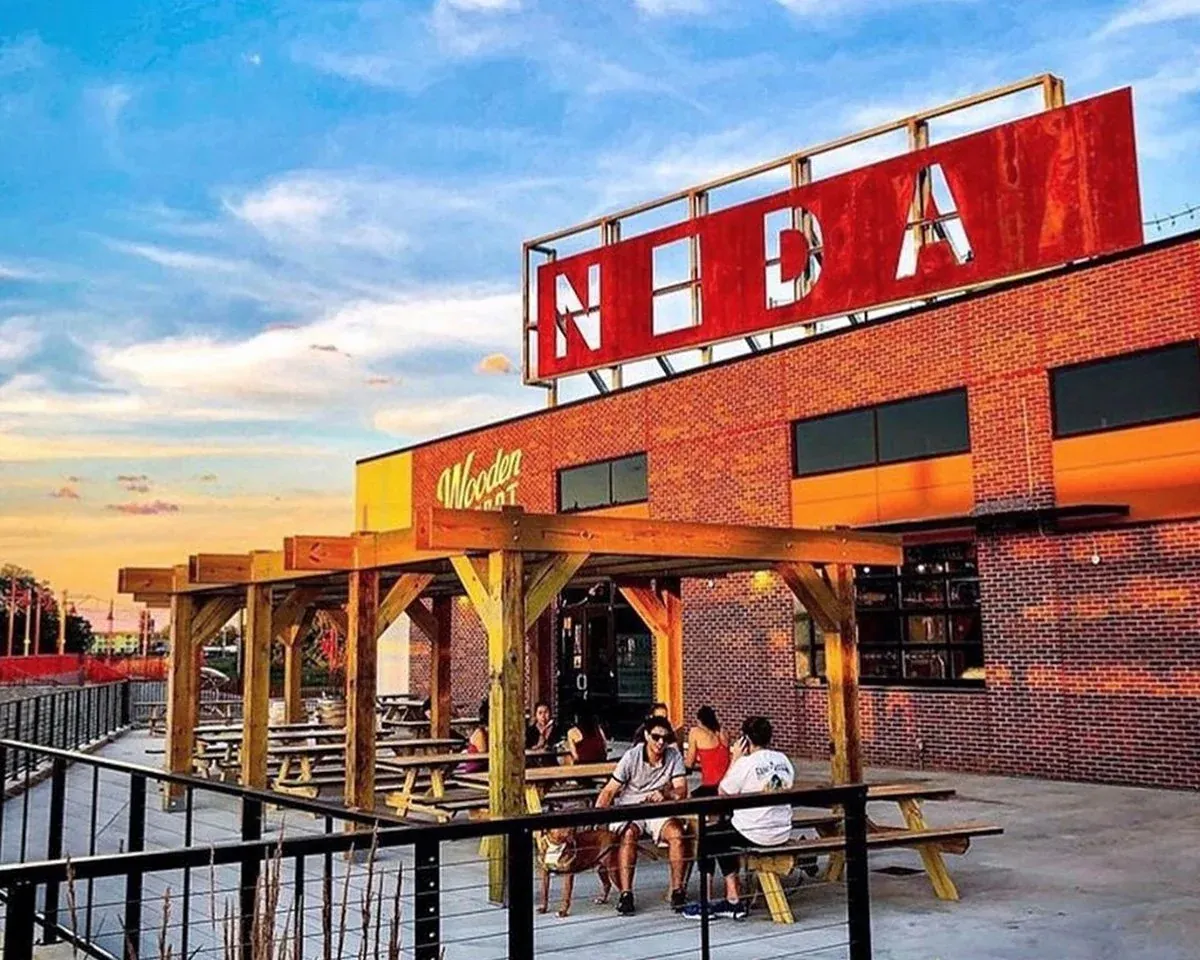
NoDa earned its name as the North Davidson arts district, and it still wears that identity well. Galleries, mural walls, breweries, and live music venues line the central stretch. The Optimist Hall food hall sits on the southern edge. The LYNX Blue Line stops twice in the neighborhood, putting Uptown, South End, and UNC Charlotte all within a short ride.
The housing stock is a mix: older mill-village cottages and bungalows on the original streets, contemporary townhomes filling in around the rail corridor, and newer single-family infill on the outer blocks. Walk Score is 65, which is meaningful in Charlotte.
Median price: Sits close to the citywide median, noticeably under what buyers pay in Plaza Midwood or Elizabeth.
Who thrives here: creatives, light-rail commuters, first-time buyers who want personality, and anyone who wants a craft-beer-and-pizza Friday night to be a five-minute walk from home.
What to know before you buy: noise. NoDa is alive, and that includes train horns and music on weekend nights. Some streets are quieter than others. If you're sound-sensitive, ask about cross streets and proximity to the rail.
Local picks worth visiting: Haberdish for southern food done right, Smelly Cat Coffeehouse & Roastery for a NoDa institution, Cordelia Park for green space.
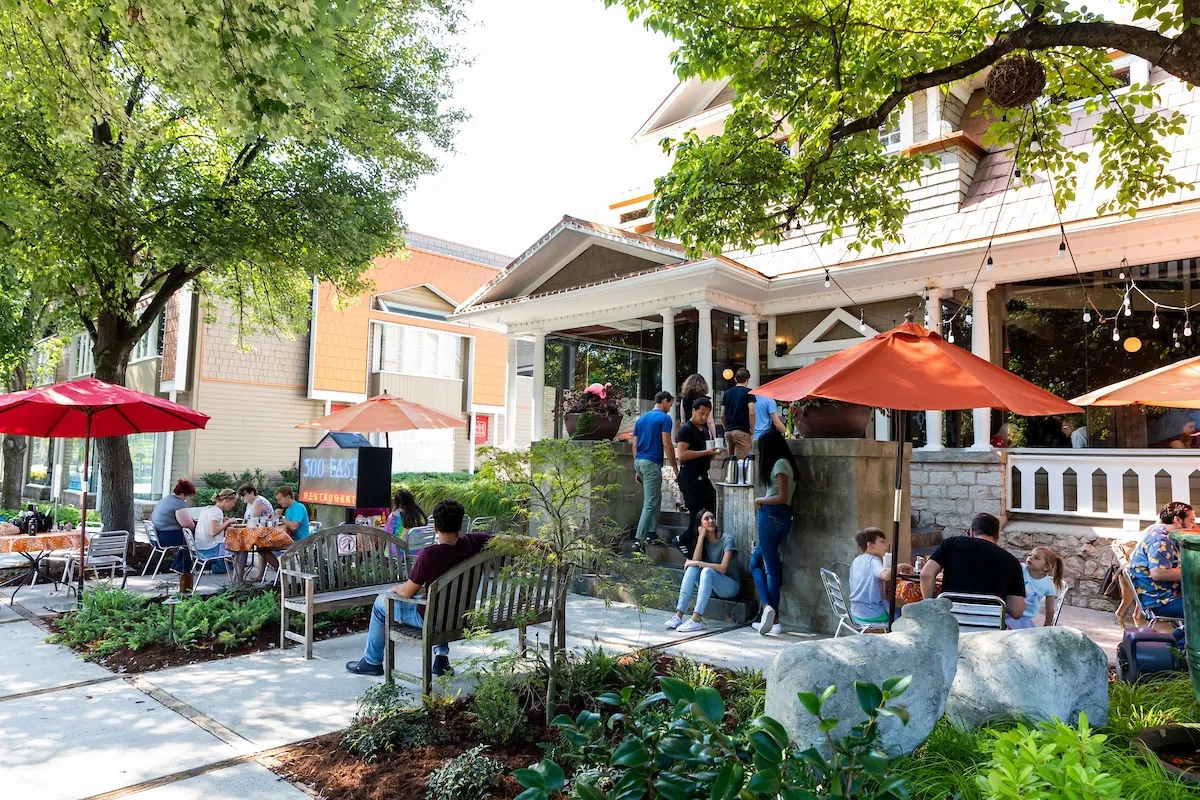
Dilworth is Charlotte's oldest streetcar suburb and one of only six neighborhoods in the city with local historic district protection. That second part matters: it means the architectural integrity of the neighborhood is preserved by ordinance, not just goodwill. The result is a streetscape that feels settled in a way few American cities can replicate: dense canopy, Craftsman bungalows with deep front porches, and a walkable commercial spine along East Boulevard. A Walk Score of 78 puts Dilworth among the most walkable neighborhoods in Charlotte. You can live here without needing your car for groceries, dinner, or coffee.
Median price: Runs well above the citywide median, one of the higher-priced central neighborhoods. Smaller bungalow blocks sit at the more accessible end, with renovated estate-style homes reaching much further.
Who thrives here: buyers who want Charlotte's most established walkable neighborhood, are comfortable with historic-district guidelines, and value architectural character over square footage.
What to know before you buy: the historic-district protections are real. Renovations require approval, and not everything you want to do will fly. If you're a tear-down-and-rebuild kind of buyer, this is not your neighborhood. If you want a bungalow that will look the way it does today twenty years from now, it absolutely is.
Local picks worth visiting: 300 East for a long Charlotte tradition, Leluia Hall for a date night, Freedom Park for one of Charlotte's most beloved green spaces.
South End was a warehouse district twenty years ago. Today it's the densest, fastest-evolving corridor in Charlotte, anchored by the LYNX Blue Line and the linear rail trail that runs through it. New mid-rise and high-rise residential keeps coming online. Restaurants, breweries, and rooftop bars cluster along Tryon and Camden. The neighborhood reads young, urban, and unapologetically of-the-moment.
The housing stock is overwhelmingly condo and townhome. Detached single-family does exist on the western edges, but it's rare and pricey. A Walk Score of 74 reflects how much you can do without driving.
Median price: Sits close to the citywide median for condos and townhomes, one of the few attainable close-in options. Detached single-family, when it's available, runs well above that.
Who thrives here: young professionals, light-rail commuters, condo-comfortable buyers, and anyone who wants a building amenity package, a rooftop pool, and dinner downstairs.
What to know before you buy: HOA fees and special assessments. South End buildings vary widely in management quality. Read the budget. Read the meeting minutes. Buy the building, not just the unit. Construction noise is also real, since new towers continue to go up.
Local picks worth visiting: Barcelona Wine Bar for a long evening, Not Just Coffee for a strong cortado, the rail trail for a Saturday morning run.
Elizabeth is the quietly excellent middle ground between Plaza Midwood's eclecticism and Dilworth's polish. It's walkable, leafy, historic, and just east of Uptown. Independence Park anchors the neighborhood. Tree canopy is mature. Bungalows and four-squares from the early 1900s line most of the streets.
What Elizabeth has that few Charlotte neighborhoods can match: a commute. From the heart of Elizabeth, you can be at a desk in Uptown in ten minutes, on a good day five. That alone explains a lot of the demand. A Walk Score of 66 puts it in the middle of the walkable central-Charlotte pack.
Median price: Runs above the citywide median, with smaller cottages at the lower end of that range and larger renovated homes reaching well beyond it.
Who thrives here: buyers who want Plaza Midwood's feel but slightly calmer streets, healthcare workers near the Atrium and Novant campuses, and Uptown professionals who want to skip the drive.
What to know before you buy: tight inventory. Elizabeth doesn't have many homes, and the ones that come available go fast. Be ready to move when one hits the market.
Local picks worth visiting: Customshop for a long-running favorite, Daily Ritual Coffee for a neighborhood feel, Independence Park for a walk with the dog.
Uptown is the urban core of Charlotte, the high-rise center city anchored by the financial district, the Spectrum Center, Truist Field, and the convergence of every Charlotte highway. It's where the city works and increasingly where a meaningful slice of residents live. A Walk Score of 85 makes it the most walkable area in the metro.
The housing stock is almost entirely condos and apartments. Single-family does exist in pockets, especially Fourth Ward, where brick row houses and brownstone-style homes line streets that feel transplanted from a different city.
Median price: Sits close to the citywide median overall, but spans an unusually wide range for a single neighborhood, from entry-level studios to the largest penthouses in towers like The Vue or Trust.
Who thrives here: finance professionals, urban-minded buyers, owners trading a yard for a balcony view, and anyone who wants to live without a daily commute.
What to know before you buy: building matters more than unit. HOA quality varies. Some buildings are well-managed and well-reserved. Others aren't. Read everything before you write an offer. Also: weekends in Uptown are quiet in a way you should test before you commit. It's an office-day neighborhood.
Local picks worth visiting: Fin & Fino for a polished seafood evening, La Belle Helene for the brasserie experience, Fourth Ward Park for a quiet Saturday morning.
Wesley Heights
Wesley Heights is a central Charlotte neighborhood that has drawn growing attention. It sits just west of Uptown, has the historic bones (a walkable grid, Craftsman bungalows, mature canopy), and prices that remain well below South End and Dilworth by Redfin's median sale price. The transformation of Camp North End just to its north has added to that attention.
What Wesley Heights doesn't quite have yet: a robust commercial corridor. The amenities are real but thinner than Plaza Midwood or NoDa. Walk Score sits around 49, which is car-dependent today, while Camp North End to the north continues to add offices, restaurants, and housing.
Median price: Close to the citywide median by Canopy MLS's zip-code measure and somewhat above it by Redfin's neighborhood measure, with original bungalows at the lower end and renovated or larger homes pushing well beyond it. See my neighborhoods page for the current figure.
Who thrives here: buyers who want proximity to the core without paying established-neighborhood prices and who are comfortable with a neighborhood that is still changing.
What to know before you buy: the neighborhood is uneven. Some blocks have flipped and look polished. Others still have work to do. Vet the specific street, not just the listing.
Local picks worth visiting: Pinky's Westside Grill for a long-running burger spot, Noble Smoke for barbecue, Camp North End for everything else that's still being built.
Myers Park
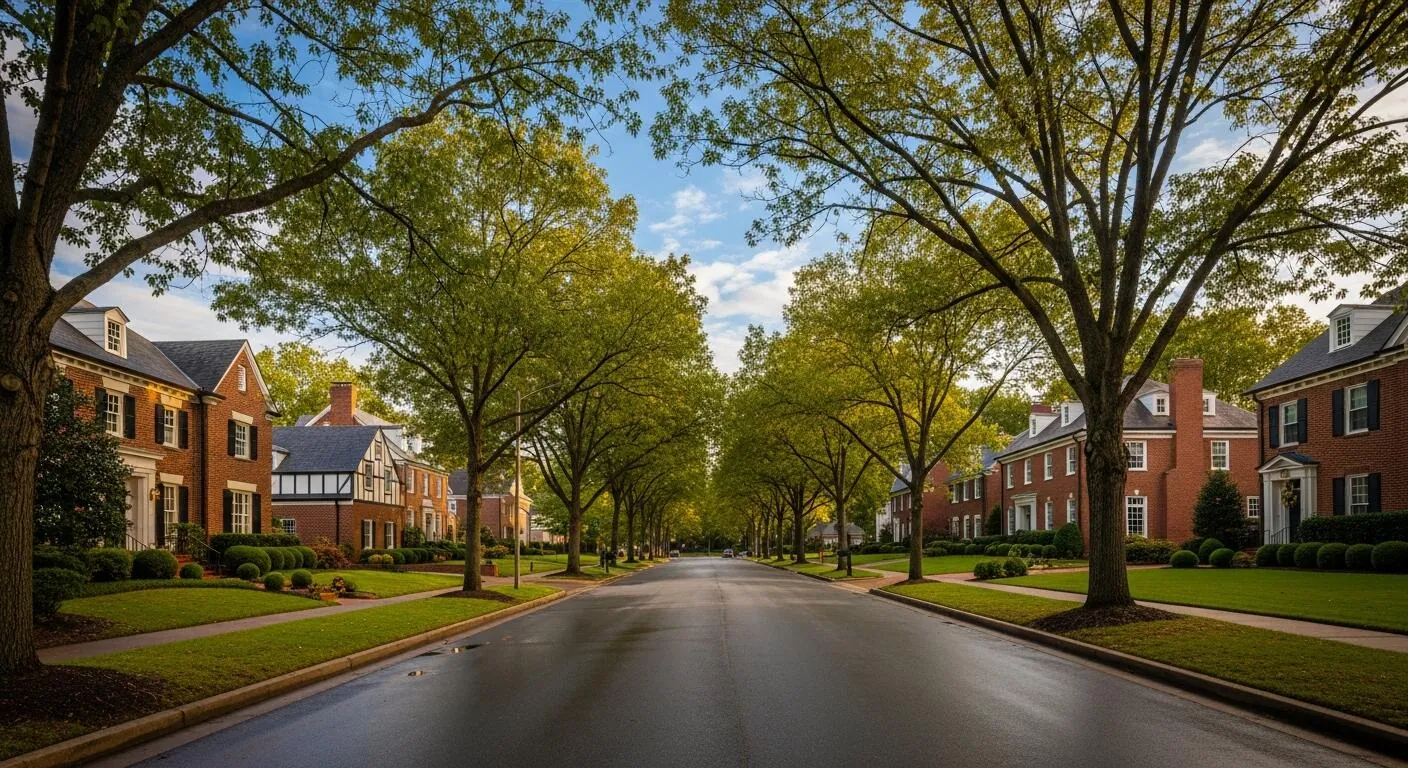
Myers Park is Charlotte's most established prestige neighborhood. It's the answer to "where does old Charlotte money live," and a lot of new Charlotte money lives here too. The neighborhood was designed in 1911 by John Nolen with the streets laid out to follow the contour of the land. The result is a neighborhood that still feels like a park, with mature oaks forming a canopy over Queens Road, Hermitage, and Roswell. A Walk Score of 43 is the catch: this is a drive-everywhere neighborhood.
The housing stock spans more than a century. Tudor revivals, Georgians, Colonials, mid-century moderns on the edges, and some recent estate-scale infill. Lot sizes are generous in a way that's almost impossible to find this close to a city center.
Median price: The highest of Charlotte's central neighborhoods, well above every other neighborhood in this guide. Smaller cottages on the edges sit at the more accessible end; estate homes on the named boulevards run far beyond that.
Who thrives here: move-up buyers wanting Charlotte's most established prestige address, and anyone who values a quiet neighborhood with quiet money.
What to know before you buy: the trees are gorgeous and they are also old. Mature canopy means real risk during storm events. Insurance and maintenance budgets need to reflect that. Some homes also predate modern HVAC and electrical assumptions, so factor renovation cost into your offer if you're buying anything that hasn't been fully updated.
Local picks worth visiting: Stagioni for one of Charlotte's most beloved Italian dinners, Higher Grounds by Manolo's for coffee, Little Sugar Creek Greenway for a walk that connects you all the way to Uptown.
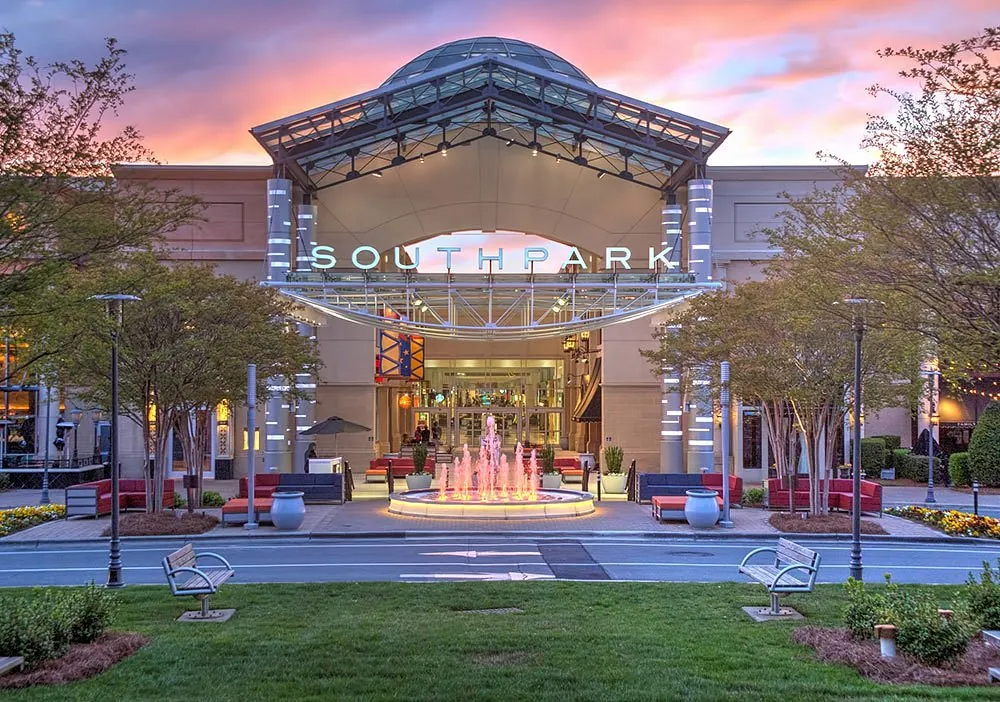
SouthPark is Charlotte's upscale commercial and residential center, built around the SouthPark Mall and the luxury retail that radiates from it. The mall itself is the largest in the Carolinas and anchors a lifestyle that's part urban, part suburban, all polished. Surrounding the commercial core are some of Charlotte's most quietly impressive single-family neighborhoods: Beverly Crest, Foxcroft, Barclay Downs.
The housing mix here ranges widely. High-rise condos like Phillips Place and The Reserve at SouthPark sit walking distance from estate-scale single-family. Townhome developments fill the in-between. A Walk Score of 46 reflects that the commercial core is walkable but the residential pockets are not.
Median price: Runs well above the citywide median when blending condos and single-family, second only to Myers Park among the neighborhoods in this guide. Beverly Crest and Barclay Downs run higher still, while condos sit at the more attainable end.
Who thrives here: affluent buyers who want luxury retail and dining at the doorstep, executives who want a short commute to the city's southern corporate corridor, and condo-comfortable downsizers.
What to know before you buy: the neighborhood reads younger than Myers Park but more polished than Dilworth. If you want quirky character, this is not it. If you want a predictable, well-maintained, amenity-rich neighborhood with strong long-term value, it absolutely is.
Local picks worth visiting: Peppervine for a strong dinner, RH Rooftop Restaurant for the view, Park Road Park for outdoor time.
Cotswold
Cotswold is the east Charlotte neighborhood buyers consistently end up choosing when they want real lot sizes and central access without paying the Myers Park premium. The housing stock is mostly mid-century, single-story or one-and-a-half-story ranches on generous lots, with selective new construction filling in.
The Cotswold Village shopping center anchors the commercial side and gives the neighborhood a small but real walkable spine. A Walk Score of 31 is honest. This is mostly a car neighborhood.
Median price: Runs above the citywide median, with smaller ranch homes at the lower end and renovated homes on larger lots reaching well beyond it.
Who thrives here: mid-century-home lovers willing to do thoughtful renovation, and buyers who want central access (Myers Park, SouthPark, and Uptown are all close) without paying for either name.
What to know before you buy: many of the homes have been renovated, but plenty haven't. If you're buying an unrenovated mid-century house, expect to spend on systems and finishes. Get a thorough inspection and price the work in.
Local picks worth visiting: Mezzanotte for one of the most-loved Italian dinners in east Charlotte, Night Swim Coffee Oakhurst for a calm morning, Briar Creek Greenway for the trails.
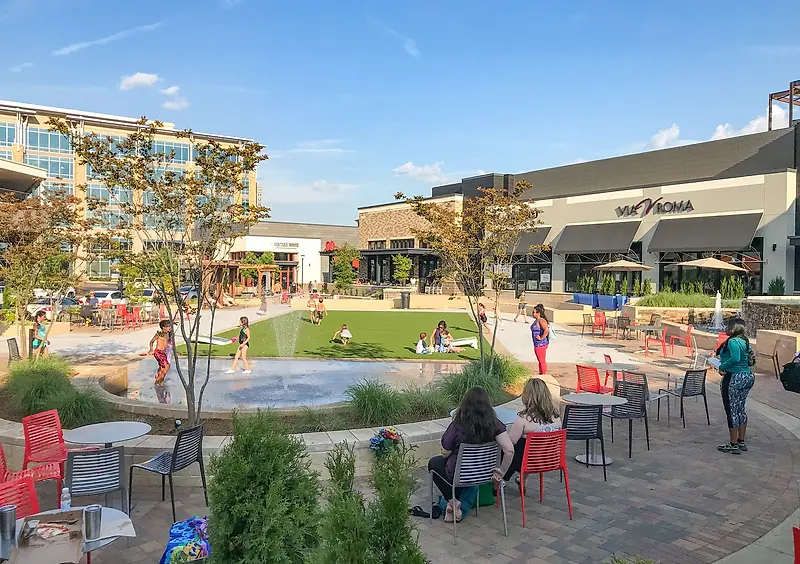
Waverly is one of south Charlotte's most intentional developments. A walkable mixed-use village sits at the intersection of Providence and Ardrey Kell, anchored by Whole Foods, a curated mix of restaurants and retail, and grocery within a ten-minute walk of most of the homes. Residential ranges from townhomes around the village core out to detached single-family on the outer streets.
The neighborhood is newer in a way that shows: newer construction, newer finishes, predictable HOA structure, and a master plan that holds the streetscape together. A Walk Score of 28 is misleading because the walkability is concentrated and intentional, even if the rest of south Charlotte is car-dependent.
Median price: Runs well above the citywide median, among the higher-priced south Charlotte options. Townhomes sit at the lower end, with detached single-family reaching well beyond it.
Who thrives here: buyers wanting newer construction and the rare south Charlotte combination of walkable retail and suburban quiet. Ardrey Kell and Providence are the nearby high schools; verify assignments with CMS.
What to know before you buy: HOA fees and rules. Master-planned communities run on covenants, and Waverly is no exception. If you want to paint your front door fire engine red, check first.
Local picks worth visiting: the village restaurants for everyday dining, Four Mile Creek Greenway for a longer walk, Whole Foods because it's right there.
Ballantyne
Ballantyne is south Charlotte's most polished suburb, the master-planned answer for buyers who want predictability and newer-construction housing stock. It sits at the southern end of Providence Road, anchored by a corporate campus that draws major employers and a residential mix that runs from townhomes through estate-scale single-family.
The neighborhood is car-dependent (Walk Score of 30) but commute times to SouthPark, the airport, and even Uptown are manageable. School assignment is a common factor in buyer demand here; verify current zoning with CMS.
Median price: Runs above the citywide median, with townhomes at the more accessible end and detached single-family on larger lots reaching well beyond it.
Who thrives here: corporate transplants and buyers wanting master-planned predictability and new-build quality.
What to know before you buy: the neighborhoods inside Ballantyne aren't all equal. Some pockets (Piper Glen, Ballantyne Country Club) trade differently from others. Specific subdivisions matter more here than the overall Ballantyne label.
Local picks worth visiting: Postino for wine and shareable plates, Bossy Beulah's for a casual chicken-and-biscuit lunch, Rea Farms Park for outdoor time.
Huntersville and Lake Norman
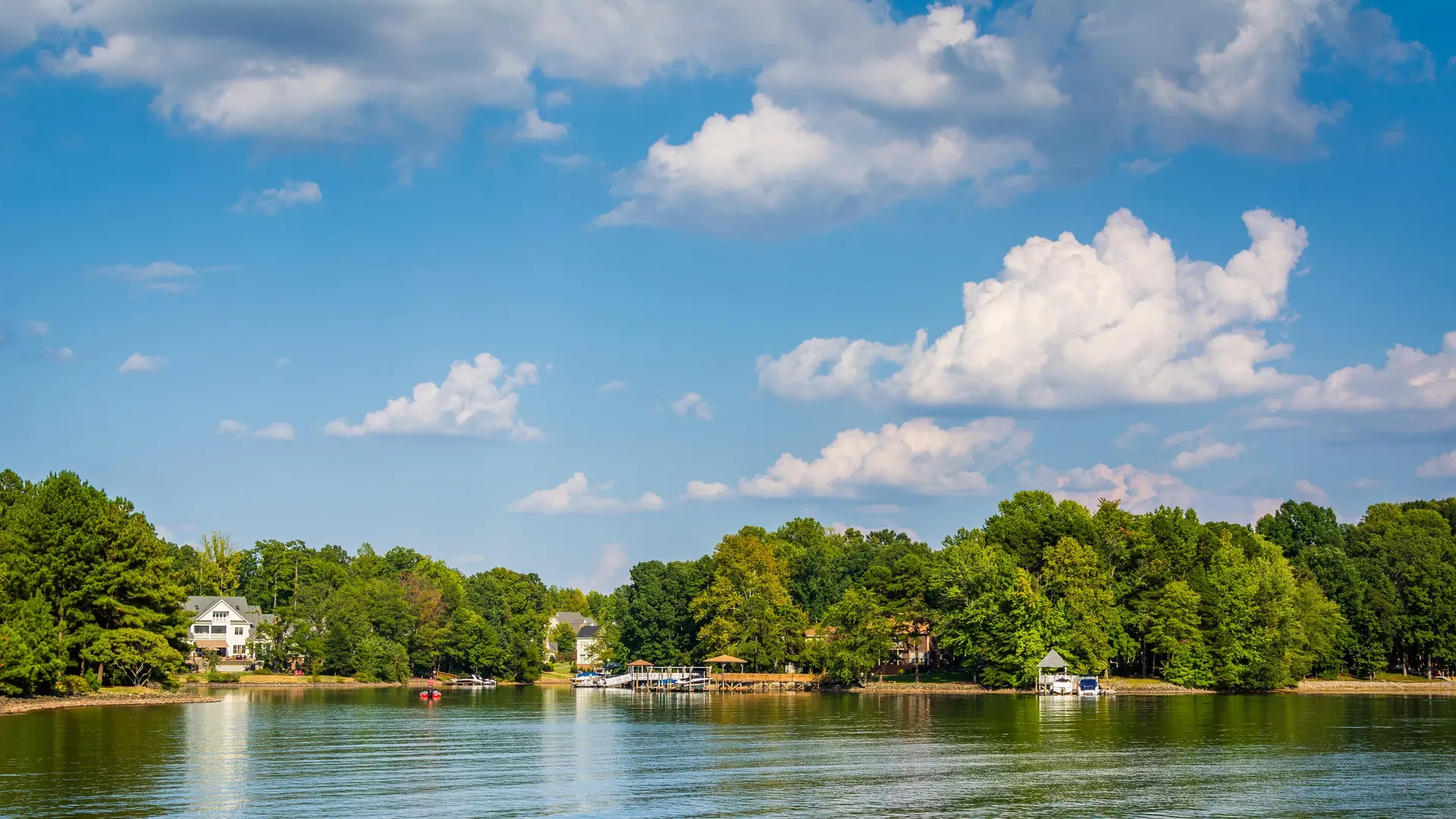
Huntersville sits 25 minutes north of Uptown and anchors the southern end of Lake Norman, North Carolina's largest man-made lake. This is where Charlotte residents go when they want a true lake-life option without leaving the metro. Birkdale Village adds a walkable mixed-use heart, with shops, restaurants, and a movie theater. The rest of Huntersville is residential suburb, with neighborhoods that range from townhomes near the village to waterfront estate homes on the lake itself.
The lake is the defining feature. Boating, paddleboarding, dockside dinners, sunsets on the water. If those things sound like your life, Lake Norman is unmatched in the Charlotte metro.
Median price: Interior Huntersville runs above the citywide median; waterfront pricing climbs steeply from there, with true lakefront among the most expensive property in the metro.
Who thrives here: lake-life buyers, remote workers willing to trade a daily commute for water access, and anyone who wants a slower pace.
What to know before you buy: waterfront comes with maintenance. Docks, seawalls, and water-side property care all add real annual cost. Also: "lake-adjacent" and "true waterfront" are not the same thing. Listings sometimes blur the line. Verify which you're buying.
Local picks worth visiting: Red Rocks Cafe Birkdale for a long-running favorite, Summit Coffee Birkdale for a strong morning, North Mecklenburg Park for green space.
Compare
Charlotte neighborhoods, side by side
Also worth knowing: three more Charlotte areas worth a look
The 13 above are the neighborhoods I get the most questions about, but three more Charlotte-area places deserve a mention. Each is somewhere I help buyers regularly, and each fills a niche the main 13 don't quite cover.
Matthews
Matthews is its own town, technically, but functionally it operates as a south Charlotte option for buyers who want real lot sizes and slightly more value per dollar than Ballantyne or Waverly. The downtown Matthews stretch has a small-town feel that Charlotte proper can't replicate. Prices typically run above the citywide median, with newer construction available on the outer streets. Best for buyers wanting a separate-town identity within commuting distance of SouthPark and Ballantyne employers.
Davidson
If you're considering Huntersville or Lake Norman, Davidson should be on your list too. It's a walkable college town anchored by Davidson College, with a tight historic core, mature trees, and a community feel that's distinct from anywhere else in the metro. Lake access is close but Davidson itself trades on character rather than waterfront. Prices typically run well above the citywide median, with historic homes near downtown climbing higher still. Best for buyers who want walkability, community, and a slower pace 30 minutes north of Uptown.
Eastover
Eastover sits adjacent to Myers Park and is, in many ways, its quieter twin. Estate-scale homes, mature lots, tree-canopied streets, and many of the same prestige cues. The neighborhood is smaller and less storied than Myers Park, which means slightly more accessible prices and slightly less visibility. Prices typically start well into estate territory and climb from there for the larger properties, in line with neighboring Myers Park. Best for move-up buyers who want Myers Park's feel without the Myers Park name premium.
How to choose your Charlotte neighborhood
Most buyers I work with come in with a price range and a vague sense of where they want to be. The real question isn't "which neighborhood is best," it's "which one fits my actual life." A few questions to work through:
What's your commute? Uptown professionals are well-served by the central neighborhoods (Plaza Midwood, Elizabeth, Dilworth, NoDa, South End, Uptown itself). Corporate professionals working south or in Ballantyne are usually better off in south Charlotte.
Do you want walkability? If yes, Uptown, Dilworth, South End, Elizabeth, NoDa, and Plaza Midwood are your shortlist, roughly in that order by Walk Score. If a walkable lifestyle isn't a priority, the field opens up considerably.
What's your school priority? School assignment varies by address, CMS zones can shift, and assigned schools sometimes sit outside the neighborhood you'd assume. Always verify the current assignment directly with CMS before you write an offer.
What's your home-style preference? Bungalows and Craftsmans concentrate in Plaza Midwood, Dilworth, Elizabeth, Wesley Heights, and parts of NoDa. Mid-century ranches are Cotswold's signature. New construction is everywhere in Waverly and Ballantyne. Condos and townhomes dominate South End and Uptown. Estate-scale homes sit in Myers Park, SouthPark, and on the Lake Norman waterfront.
How long are you staying? Buying and selling carry real transaction costs, so a longer holding period gives you more room to absorb them, and prices do not move in one direction on any schedule. If you're planning to be in the home for under three years, factor that into both your neighborhood choice and your price ceiling.
If you want a one-on-one conversation about which of these neighborhoods makes sense for your specific situation, contact me directly. No pitch, just an honest read.
By budget
Find your Charlotte neighborhood by budget
Frequently asked questions about Charlotte neighborhoods
What is the best neighborhood in Charlotte, NC?
There's no single best neighborhood in Charlotte. The most consistently asked-about are Plaza Midwood, NoDa, Dilworth, South End, Myers Park, and Elizabeth, depending on what the buyer is optimizing for. For walkability and character, Plaza Midwood and Dilworth lead. For prestige, Myers Park. For comparatively lower prices near the core, Wesley Heights and NoDa. For master-planned suburban predictability, Ballantyne and Waverly.
What is the safest neighborhood in Charlotte?
Crime data varies by block more than by neighborhood, and it shifts year to year, so a REALTOR® ranking neighborhoods by safety would not serve you well. For current data, the Charlotte-Mecklenburg Police Department publishes crime statistics by patrol division at charlottenc.gov, and I encourage every buyer to review it directly.
What is the most walkable neighborhood in Charlotte, NC?
Uptown has the highest Walk Score at 85, followed by Dilworth at 78 and South End at 74. Elizabeth, NoDa, and Plaza Midwood all sit in the 56 to 66 range, which is honestly walkable for daily-life purposes. Outside those, most of Charlotte is car-dependent.
Which Charlotte neighborhoods are most walkable to nightlife and dining?
South End, NoDa, Plaza Midwood, Uptown, and Elizabeth consistently lead for buyers prioritizing restaurants, bars, and walkable evenings. South End and Uptown skew condo and apartment; NoDa and Plaza Midwood offer more single-family options at lower entry prices; Elizabeth is a mix of both.
What is the median home price in Charlotte, NC?
The Charlotte median home price is approximately $418,000 as of September 2026 (Canopy MLS via RPR), with prices varying widely by neighborhood. Among the central neighborhoods, NoDa and Uptown sit at the lower end, Dilworth runs well above the citywide median, and Myers Park is the highest of the group. For the most current numbers, see my monthly Charlotte market insights page.
Is Charlotte, NC a good place to buy a house?
For most buyers with a medium-to-long holding horizon, yes. Charlotte's metro adds roughly 157 residents per day, and the housing supply hasn't kept pace. That demand pressure has supported appreciation across most neighborhoods, especially the walkable central ones. The current market is a moderate seller's market, with median days on market around 28 as of September 2026 (Canopy MLS via RPR). Timing the market is a fool's errand, but the underlying fundamentals are sound.
Which Charlotte neighborhoods are appreciating fastest?
Price changes vary by period and data source, and activity is not the same as price growth. For the three months ending August 2026 compared with a year earlier, Redfin's median sale price was up 12.6% in Dilworth, up 11.1% in South End, up 1.5% in NoDa, down 2.5% in Wesley Heights, and down 20.6% in Plaza Midwood. Development, such as Camp North End near Wesley Heights and the LYNX Blue Line in NoDa, is visible in several of these areas, but small sales counts can swing any single figure.
Which Charlotte neighborhoods have the largest lots and newest construction?
Buyers prioritizing lot size and newer construction most often land in Cotswold, Waverly, Ballantyne, and Huntersville. Myers Park and Dilworth lead on architectural character. School assignments vary by address in every one of these; verify current zoning directly with CMS.
The bottom line
Charlotte rewards buyers who do their homework on neighborhoods before they shop. The differences between Plaza Midwood and Ballantyne, or between Dilworth and Cotswold, are not small. They shape your daily life, your commute, your weekend routine, and your home's long-term performance.
If you're moving to Charlotte and you want a local read on which neighborhood fits your actual life (not the one the algorithm guessed you wanted), let's talk. I'll give you honest answers, including the ones that mean a longer search or a different price range than you came in with.
Dante Pinto is a licensed North Carolina real estate broker with The Redbud Group at Keller Williams SouthPark, specializing in the central Charlotte neighborhoods. He lives in Plaza Midwood and has been a Charlotte real estate investor since 2015. About Dante · Contact
This article was written by Dante Pinto, a licensed real estate broker in North Carolina, NC License #349833. Dante Pinto is affiliated with The Redbud Group at Keller Williams SouthPark, Firm License C12658, Broker-in-Charge Brijal Shah, located at 5600 77 Center Dr #180, Charlotte, NC 28217. Office: 561-308-7010.
Information accuracy. Market statistics and neighborhood details reflect data available as of the publication date and are subject to change. Walk Scores are provided by Walk Score and are not guaranteed for accuracy. Sources include Canopy MLS, Realtors Property Resource (RPR), Walk Score, and the U.S. Census Bureau. Market conditions, school assignments, zoning, HOA rules, historic district guidelines, and tax rates change frequently. Verify all material details independently before making a real estate decision.
Not professional advice. This content is for general informational purposes only. It is not legal, tax, financial, or appraisal advice. North Carolina requires a licensed real estate attorney at closing. Consult a qualified attorney, CPA, lender, or licensed appraiser regarding your specific situation. Home value statements in this article are general market observations, not a comparative market analysis (CMA) or appraisal.
Equal Housing Opportunity. The Redbud Group at Keller Williams SouthPark and Dante Pinto are committed to equal opportunity in housing. We do business in accordance with the Federal Fair Housing Law and the Equal Credit Opportunity Act.
Editorial independence. Local businesses, restaurants, coffee shops, and parks mentioned in this article are unpaid editorial recommendations based on the author's local experience. No business has compensated the author for inclusion.
Moving to Charlotte?
Let's find the neighborhood that fits
Tell me your budget, your commute, and how you actually want to spend a Saturday, and I'll give you an honest read on which of these neighborhoods makes sense. No pitch.